
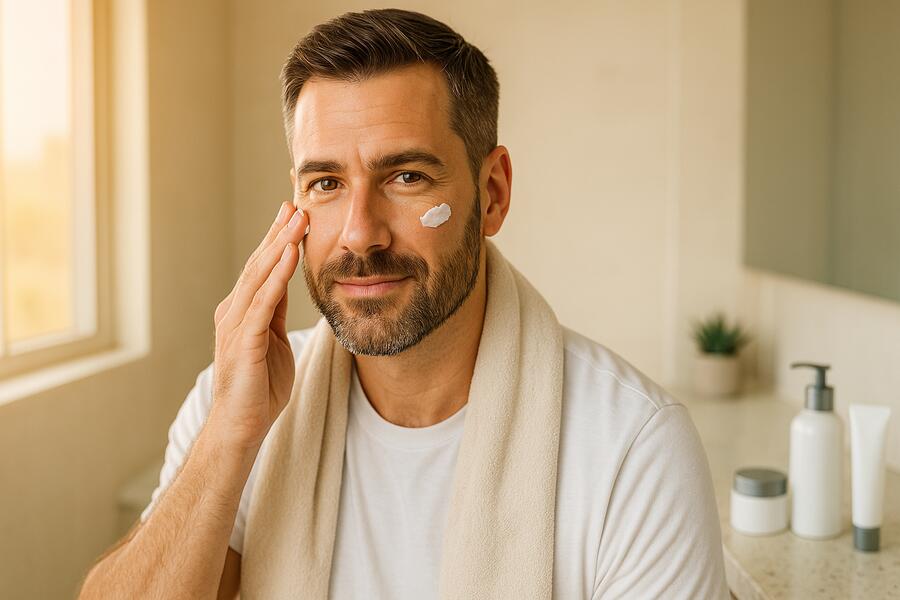
For many men, skincare used to be a minimalistic affair, often limited to soap and water. However, the understanding that healthy skin contributes to overall well-being and confidence has led to a significant shift. While professional facials offer deep cleansing and targeted treatments, the secret to truly maximizing and extending those benefits lies in a consistent at-home routine. This article will lay out the essential men’s skincare routine basics, focusing on the core steps that support professional results and help maintain skin health between your facial appointments. We’ll cover the fundamental triad of cleanse, moisturize, and sunscreen, along with optional additions to address specific concerns.
💡 Key Takeaway: A simple yet effective daily skin care men routine consists of three core steps: cleansing, moisturizing, and applying sunscreen. This routine is essential for maintaining skin health, preventing issues, and enhancing the results of professional facials.
The Foundation: Essential Men’s Skincare Routine Basics
Step 1: Cleanse Your Face (Morning & Night)
Cleansing is the cornerstone of any effective skincare routine. Throughout the day and night, your skin accumulates dirt, oil, sweat, and environmental pollutants. A proper cleanse removes these impurities, preventing clogged pores, breakouts, and dullness.
- Morning Cleanse: Wakes up your skin and removes any overnight buildup of oil and dead skin cells.
- Evening Cleanse: Crucial for washing away the day’s grime and preparing your skin for repair and regeneration overnight.
- Choose Wisely: Opt for a gentle, non-stripping cleanser suitable for your skin type. Avoid harsh bar soaps, which can dry out and irritate the skin. Look for labels like “gentle,” “hydrating,” or “non-comedogenic.”
- Technique: Wet your face with lukewarm water, apply a small amount of cleanser, and gently massage it into your skin using circular motions for about 30-60 seconds. Rinse thoroughly and pat dry with a clean, soft towel.
Step 2: Moisturize (Morning & Night)
Moisturizing is vital for maintaining your skin’s hydration and barrier function, even for oily skin types. It helps to lock in moisture, protect against environmental stressors, and keep your skin soft and supple.
- Morning Moisturizer: Hydrates your skin and creates a smooth canvas for the day.
- Evening Moisturizer: Supports your skin’s natural repair process while you sleep.
- Product Choice: Select a moisturizer appropriate for your skin type. Lighter lotions or gels work well for oily skin, while richer creams are better for dry skin. Look for “fragrance-free” and “non-comedogenic” labels.
- Application: Apply moisturizer to your face and neck immediately after cleansing while your skin is still slightly damp. This helps to seal in hydration.
Step 3: Apply Sunscreen (Every Morning)
This is arguably the most critical step for long-term skin health. Sun exposure is the leading cause of premature aging (wrinkles, sunspots), and significantly increases the risk of skin cancer. Incorporating sunscreen into your cleanser moisturizer sunscreen routine is non-negotiable.
- Daily Protection: Apply a broad-spectrum sunscreen with an SPF of 30 or higher every single morning, regardless of whether it’s sunny or cloudy, indoors or outdoors.
- Generous Application: Don’t skimp! Apply a nickel-sized amount to your face and neck.
- Look For: Zinc oxide or titanium dioxide for physical protection, or chemical filters like avobenzone, octinoxate, or octisalate. Many moisturizers now come with SPF, which can simplify your routine.
💡 Key Takeaway: Consistently using a gentle cleanser, a suitable moisturizer, and broad-spectrum SPF 30+ sunscreen daily forms the bedrock of good skin health for men, protecting against damage and supporting professional treatment results.
Optional Additions and Supporting Professional Treatments
Enhancing Your Routine (Optional)
Once you’ve mastered the basics, you might consider adding targeted treatments based on your skin concerns:
- Exfoliator (1-3 times/week): A gentle chemical exfoliant (like an AHA or BHA) or a mild physical scrub can help remove dead skin cells more effectively, preventing ingrown hairs and improving skin texture.
- Serum (Morning/Night): Serums are concentrated treatments for specific issues. Examples include:
- Vitamin C Serum: For antioxidant protection and brightening (morning).
- Hyaluronic Acid Serum: For intense hydration.
- Niacinamide Serum: For redness, oil control, and pore appearance.
- Retinol (Night only): For anti-aging and acne (start slowly, 1-2 times a week).
- Eye Cream (Morning & Night): The skin around the eyes is delicate and often the first to show signs of aging.
| Routine Step | Frequency | Purpose |
|---|---|---|
| 1. Cleanser | Morning & Night | Removes dirt, oil, impurities; prevents clogged pores. |
| 2. Moisturizer | Morning & Night | Hydrates skin, supports barrier function, keeps skin soft. |
| 3. Sunscreen (SPF 30+) | Every Morning | Protects against UV damage, prevents premature aging & skin cancer. |
| Optional: Exfoliator | 1-3 times/week | Removes dead skin, improves texture, prevents ingrowns. |
| Optional: Serum | Morning/Night (as needed) | Targets specific concerns like anti-aging, hydration, redness. |
| Optional: Eye Cream | Morning & Night | Hydrates and protects delicate skin around eyes. |
Supporting Professional Results
An effective men’s skincare routine basics at home acts as a powerful complement to professional treatments. Regular facials provide a deep clean, professional exfoliation, and targeted treatments that are hard to replicate at home. By consistently following a simple home routine, you:
- Extend Benefits: Help maintain the results of your facial for longer.
- Prevent Issues: Reduce the likelihood of breakouts, dryness, or irritation returning quickly.
- Maximize Product Absorption: Clean, healthy skin is better able to absorb the active ingredients from your professional facial and your at-home serums.
- Overall Skin Health: Contribute to the long-term health, appearance, and resilience of your skin.
Don’t underestimate the power of consistency. A simple, daily commitment to these steps can dramatically improve your skin’s health and appearance, ensuring that the investment in your professional facials, such as those where you can see the full service details, truly pays off.
Have questions about a simple men’s skincare routine between facials? Reach out to our team today.
Frequently Asked Questions About Men’s Skincare Routine
Is washing my face with bar soap okay for my skin?
Most traditional bar soaps are too harsh for facial skin. They often contain strong detergents and a high pH that can strip the skin of its natural oils, leading to dryness, irritation, and potentially disrupting the skin’s protective barrier. It’s always better to use a dedicated facial cleanser that is gentle, pH-balanced, and formulated for your specific skin type.
Do men really need to use moisturizer? My skin feels fine without it.
Yes, all men need to moisturize, regardless of their skin type. Even oily skin can become dehydrated, which can actually trigger it to produce more oil. Moisturizer helps maintain the skin’s barrier function, prevents water loss, and protects against environmental damage. It keeps your skin healthy, comfortable, and can reduce signs of aging over time.
I work indoors, do I still need to wear sunscreen every day?
Absolutely. While working indoors reduces direct sun exposure, UV rays can still penetrate windows, contributing to skin damage. Additionally, if you step outside for even short periods (commute, lunch break), you’re exposed. Daily sunscreen is crucial for preventing premature aging, sunspots, and significantly reducing your risk of skin cancer, regardless of your primary environment.
What’s the best order to apply skincare products?
The general rule of thumb is to apply products from thinnest consistency to thickest. So, after cleansing, you’d typically apply any toners, then serums, followed by eye cream, moisturizer, and finally sunscreen (in the morning). This ensures that highly concentrated ingredients in serums can penetrate effectively before heavier creams create a barrier.
How can I tell my skin type to choose the right products?
You can generally determine your skin type by observing your skin a few hours after cleansing without applying any products:
- Oily: Shiny all over, prone to breakouts.
- Dry: Feels tight, flaky, often dull.
- Combination: Oily in the T-zone (forehead, nose, chin) but normal or dry elsewhere.
- Normal: Balanced, rarely shiny or tight.
- Sensitive: Reacts easily with redness, itching, or stinging to products.
A professional esthetician can provide a precise skin analysis and product recommendations.